Drinking Water From Air: Is It Safe, Clean, and Healthy?
Say “water from air” to someone for the first time and you will usually get a raised eyebrow, followed by the one question that matters: is it actually safe to drink?
It is a fair thing to ask. We are all careful about what goes into our glass, and drinking water from air sounds unfamiliar enough to deserve some scrutiny. So let's give it that scrutiny. This post looks at where the water comes from, how it is treated, how it compares with what you drink today, and what you should check before trusting any machine that makes it.
Where does drinking water from air actually come from?
The air around you holds water vapour all the time. You can see the proof on a cold bottle taken out of the fridge, which is soon covered in droplets. Nobody poured that water on the bottle. It condensed out of the air because the surface was cold enough.
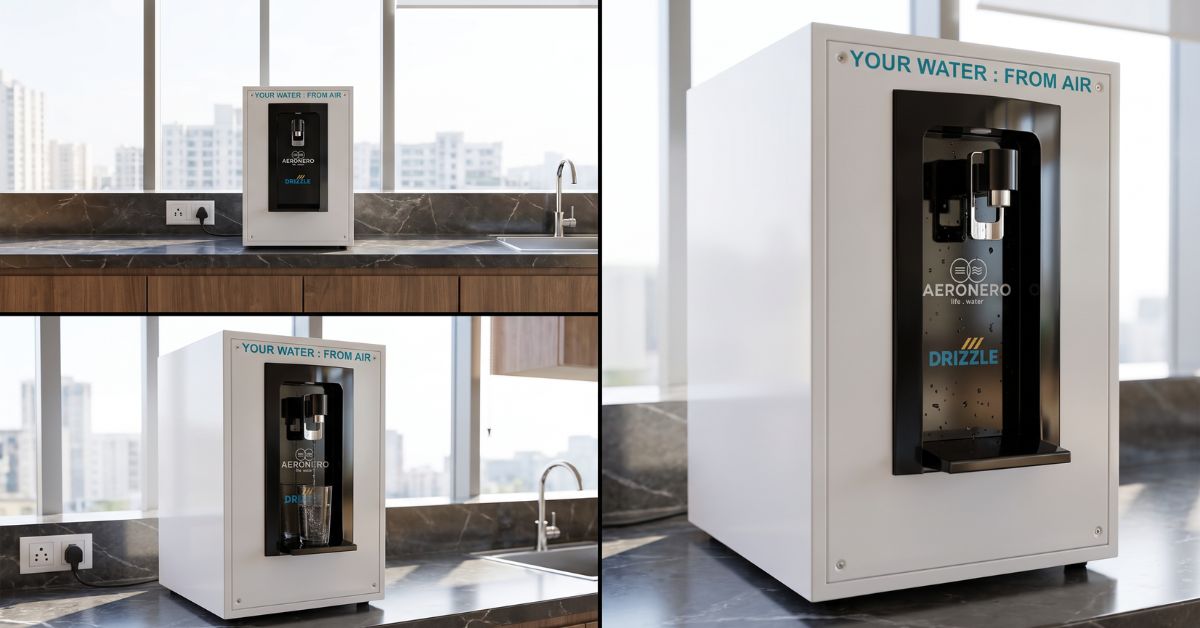
An atmospheric water generator uses the same principle, only in a controlled and far more hygienic way. Incoming air is filtered, then cooled until its moisture turns into liquid. In effect it is a small, tidy version of the natural water cycle that gives us dew and rain. Aeronero's ConDessa™ technology is built around exactly this idea, and the water of air it collects is only the starting point.
That last part matters. Freshly condensed water is not automatically drinkable. Because it forms from air, it can pick up dust, odours or microbes along the way, and it contains almost no minerals. Any honest answer to “is it safe?” has to look at what happens after the condensation.
How the water is made safe
A properly designed air water generator treats the water in layers, so no single step has to do all the work. In Aeronero's machines the sequence is:
• Air filtration at the start, so dust and particles never enter the system.
• Cooling and condensation, which turns moisture into fresh water.
• Pre-carbon and post-carbon filtration, which remove chlorine, odours and organic contaminants and improve taste.
• Ultra UV purification, which eliminates bacteria and other harmful microorganisms.
• Mineralisation, which adds essential minerals and holds the pH between 7.0 and 8.5.
The layering is the point. Filtration deals with particles and odour, UV deals with microbes, and mineralisation deals with taste and balance. Each stage covers something the others cannot.
Aeronero also displays certifications and affiliations on its website, including ISO, WHO GMP, FSSAI and the India Water Quality Association, along with a Laghu Udhyog Bharti certificate. When you are evaluating any drinking water from air system, credentials like these are worth asking about, and so is a recent water test report for the specific model you are buying.
Is it cleaner than bottled or RO water?
Cleanliness is not only about what is in the water at the plant. It is about what happens between the plant and your lips.
Bottled water travels. It is filled, capped, loaded, trucked, stored and handed from person to person, and Aeronero's comparison flags the risk of microplastics, chemicals and contamination at each of those stages. Of the three options compared on the website, bottled water is also among the heaviest on plastic and carbon footprint.
RO water has a different weakness. It is made at home, which helps with freshness, but a typical RO system wastes more than half the water it handles, and it relies on whatever source water comes in. If the source is poor, the system is working uphill.
Water from an AWG is made on the spot, from air, and dispensed from the same machine. There is no plastic bottle, no truck and no middleman, which is why the website lists the spread of microbes as “minimised by reducing the medium”. Fewer hands and fewer containers means fewer chances for things to go wrong.
Is it healthy?
Let's be careful and honest here. Water's main job is hydration, and no type of water is a medicine. What a well-made system can do is deliver clean, good-tasting, properly balanced water, and that makes it easier to drink enough of it every day.
Two features matter. The first is mineralisation. Water produced by condensation is naturally very low in minerals, so a quality AWG adds them back. Water with essential minerals tastes fuller and less flat than plain filtered water. The second is pH. Aeronero's water is held in an alkaline range of 7.0 to 8.5, which sits comfortably within the range generally seen for drinking water. If you want to go deeper on this, our post on alkaline mineral-rich water covers it in detail.
If you have a specific medical condition or dietary requirement, speak to your doctor about what water is right for you. For everyone else, the practical benefits come from three things: no plastic contact, controlled quality, and water that tastes good enough to keep drinking.
What keeps it safe over time?
Safe water is not a one-time achievement. It is a habit. Whichever machine you choose, a few things decide whether the water stays clean month after month:
• Filter changes on schedule. Carbon filters and UV components do not last forever. Skipping a service is the fastest way to lose the benefits.
• A clean installation spot. The machine draws in air, so place it away from heavy dust, smoke or cooking fumes where you can.
• Regular cleaning of the dispensing area. The same care you would give any water dispenser.
• Support you can reach. Pick a brand with a service network and a real helpline. Aeronero's is 1800 419 4190.
These steps are routine, not complicated. But they are the difference between a machine that works for years and one that quietly gets worse.
Common myths about drinking water from air
“It's just the water from an air conditioner.” Not at all. AC condensate is not treated for drinking and collects in trays and pipes never designed for it. A purpose-built AWG filters the air first, then purifies, sterilises and mineralises the water before it reaches you.
“It needs no upkeep.” Every purification system needs maintenance, and this one is no exception. Filters and UV components need servicing on schedule.
“It only works in rainy places.” Humidity affects how much water you collect, not whether the process works. If you are in a very dry area, ask the team what output to expect at your site.
“It must taste strange.” The carbon filtration and mineralisation stages exist precisely to prevent the flat or off taste people expect.
So, is it safe, clean and healthy?
When the machine is built around real filtration, UV sterilisation and mineral balance, and when it is maintained properly, drinking water from air is a safe and clean option, and a good-tasting one. It also removes plastic bottles and tanker dependence from the equation, which is a health win and an environmental one.
The smartest approach is the same as with any water source: ask for the credentials, ask for the test reports, and see the machine in action. To book a demo or ask about a specific location, get in touch with Aeronero.